
Everything You Need to Know About Kitchen Range Hoods

Our appliance dealers try to sell us a range hood, our mama’s kitchen had a range hood, our neighbor’s beautiful home had a range hood, but is it neccessary? Do we really have to have one in our space to know that we did it right? Does it matter?
Let’s break it down and walk through what a range hood actually does, how it is set up, what we will miss if we decide to skip it, and layout what matters when you are deciding.
We will go over the function and explain why we see a Range Hood as the eyebrows of a kitchen… (spoiler alert… there’s a reason why shaving off an eyebrow after loosing a bet is considered a punishment).
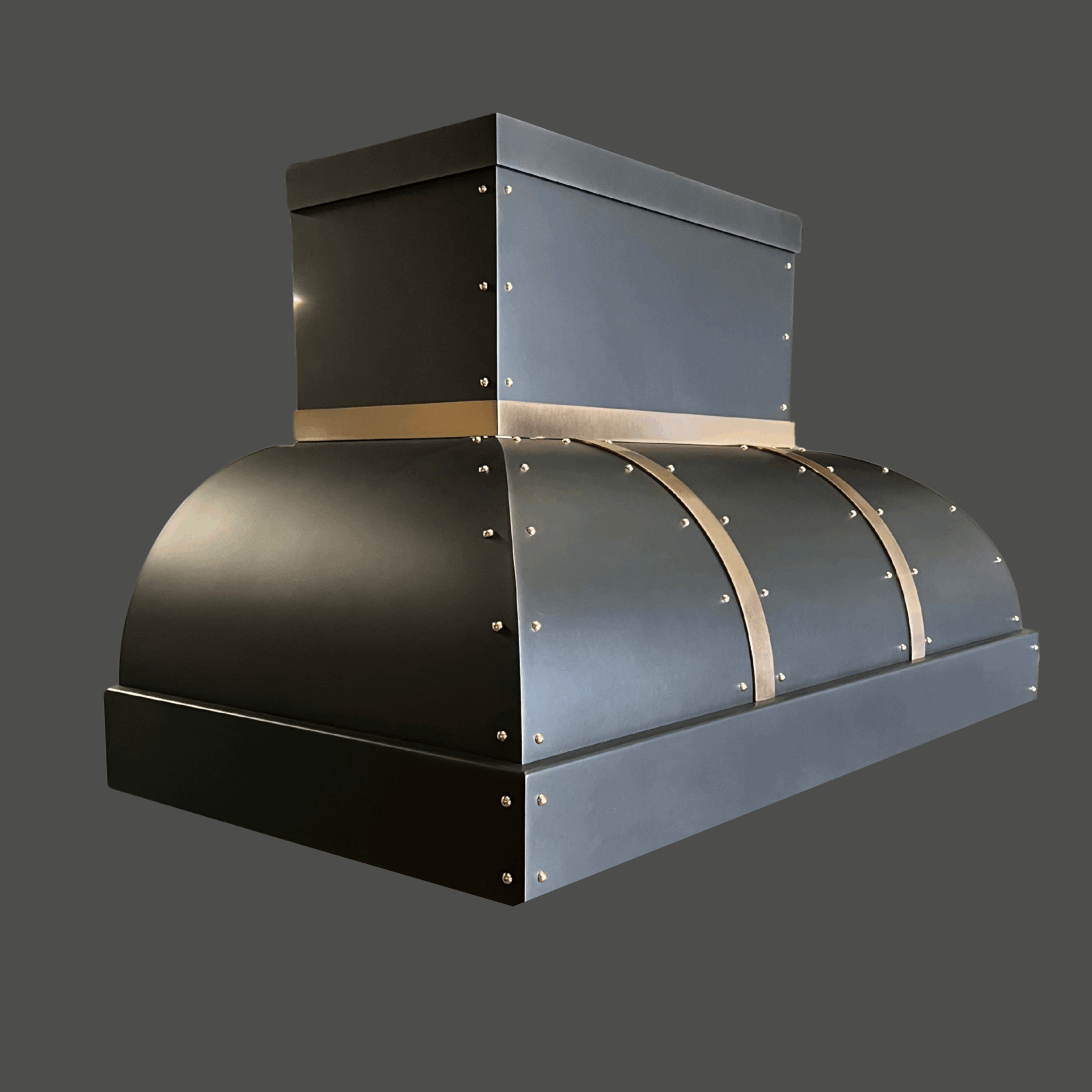
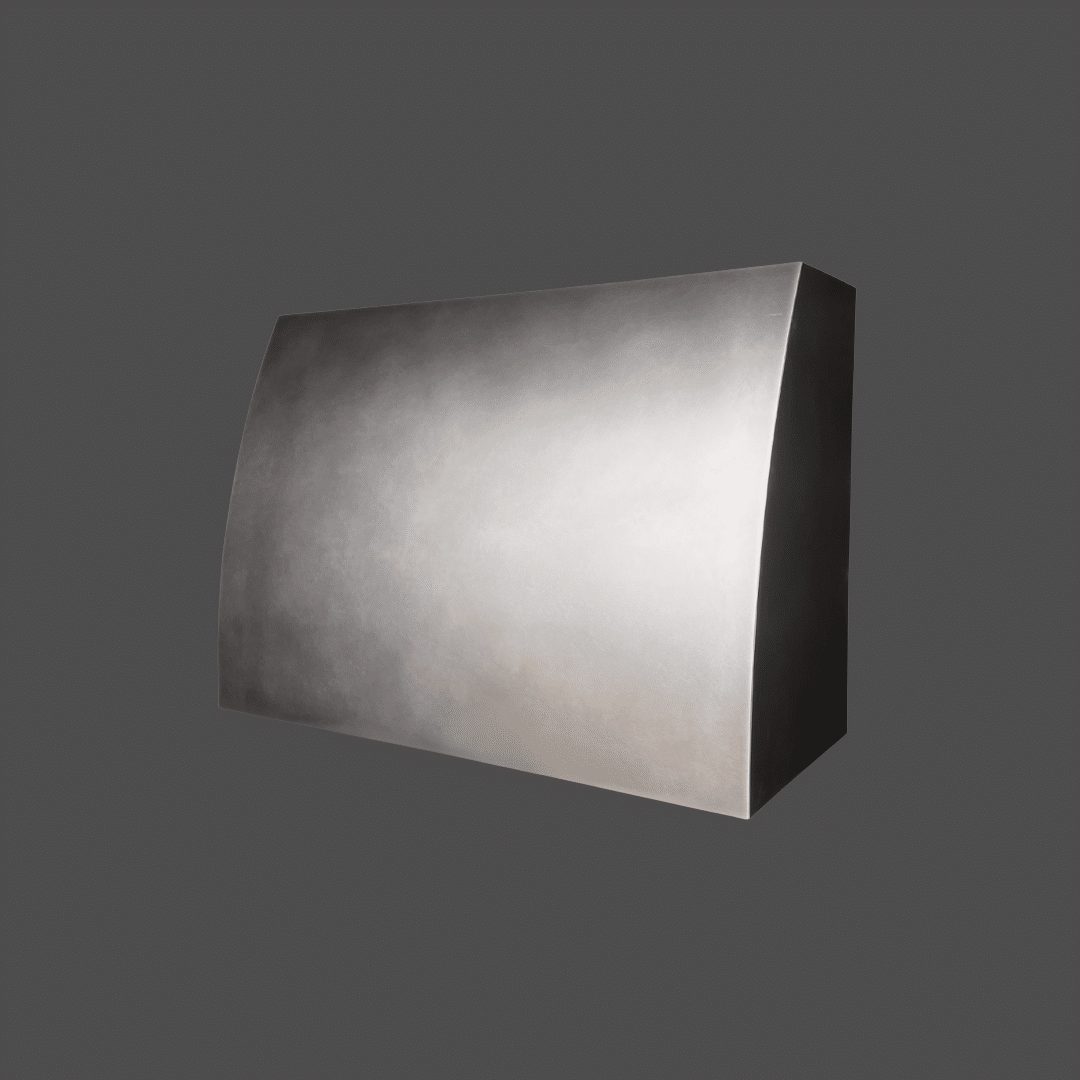
What Is a Range Hood?
First things first! A range hood (also known as vent hood, stove hood, or exhaust fan) is the ventilation system installed above your cooktop or range.
Its main job is simple:
It keeps you safe from carbon monoxide that is released when using gas ranges. In addition, they keep grease from settling on your surfaces, as well as remove smoke, heat, steam, and cooking odors from your kitchen.
When you sauté, sear, boil, fry, or accidentally burn toast (we’ve all been there), your range hood pulls that air away from your cooking surface. Depending on the type of unit you have, it can either:
- Vent outside your home, or
- Filter and recirculate air back into the room
A range hood keeps you safe, your kitchen clean and odor-free.
How Does a Range Hood Work?
Behind the beautiful exterior, every range hood relies on a few key components:

1. The Blower
This is the ‘guts’ of the hood, where all the real work happens. It houses the task lighting and is responsible for pulling air up and away from your cooking surface. The higher the CFMs (Cubic Feet per Minute) the more air is pulled away.
The motor is often inside of the blower itself although for quieter use, you are able to get units that have the motor in the duct work or on the extierior of your home.
3. The Ductwork
This is the pipe system that pulles the air to the ouside and is installed by your HVAC contractor to make sure it is done right. The more elbows and turns in your ductwork, the higher cfm’s your contractor will recommend.
In-line Blowers can be placed within the ductwork to keep the noise of the motor away from your kitchen. What that means is that the motor sits inside the duct itself, instead of in the hood.
2. The Filters
The filters are also housed within the blower. They trap the grease, smoke particles, and odors as air is pulled through them to keep your venting clean and safe from accidental fire!
Filters come in various types with the most popular being a clean-line baffle filter. Charcoal filters are popular for spaces that need recirculating blowers and aluminum screen filters are most cost effective.
4. The Beauty
We love our kitchen to be clean and safe, but come on… who are we kidding? We really love the beautiful styles and finishes of the range hood to set the design intention and tone in our kitchens!
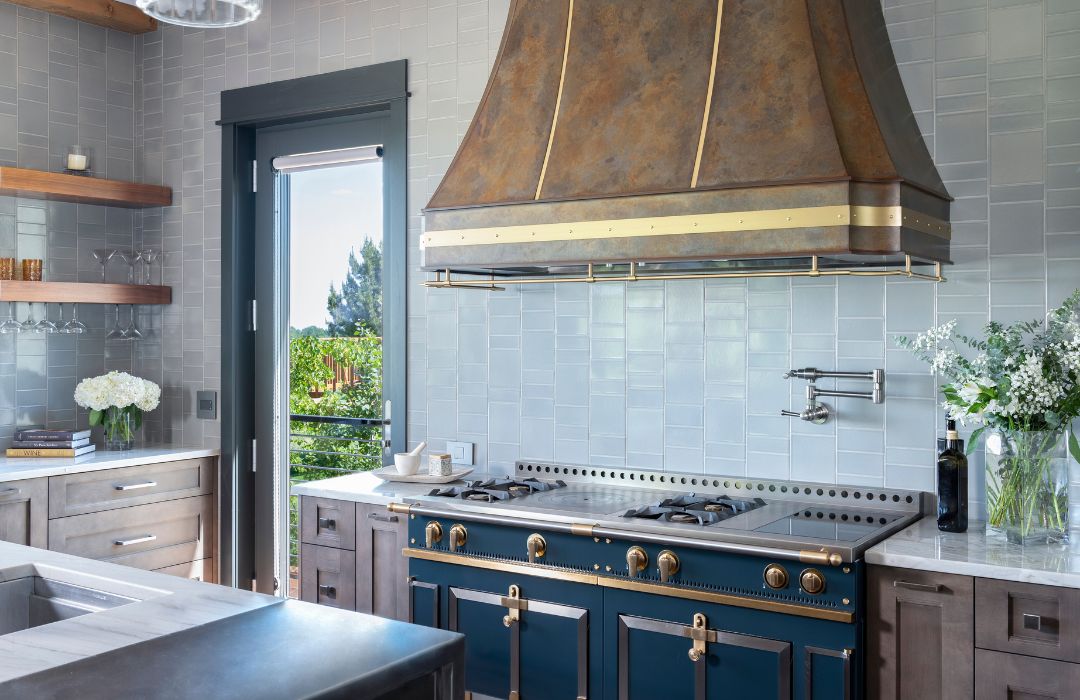
While the body of the range hood functions to house the fan, motor, filters, and connect ductwork, it can either look exactly like that…. function. Or, it can be that show-stopping, jaw-dropping, taste confirming piece that really fills us with pride. – Yes, please.
Where Does a Range Hood Go?
The short answer is of course, over your range. But, where matters. You will want to place it:
- Directly over your range or cooktop
- Centered horizontally
- Mounted at the “proper height”
What is the proper height for your range hood?
The proper height is different in different spaces. But the height does matter more than people realize. Too high? It won’t capture smoke effectively. Too low? It becomes an obstacle (and a head-bump hazard).
When it’s placed correctly, it works quietly and efficiently in the background, or quietly and efficiently in the foreground if you are more like us and enjoy its presence.
Choose your range hood height based on what your gas range manufacturer suggests, balanced with what you prefer for design and function of your height and use of the space. Most are placed between 28″–36″ above the cooktop, depending on the setup you have in your space and the requirements based on BTU of your gas stove.
Why Is a Range Hood So Important?
Let’s talk about this by thinking through what can happen without proper ventilation.
1. Air Quality Takes a Hit
Cooking releases:
- Smoke
- Carbon monoxide
- Grease particles
- Odors
- Moisture
Without a hood, all of that stays in your home, on your walls, in your cabinets and ultimately in your lungs where it can cause health issues. This of course, is the primary reason modern building codes require range hoods above gas cook tops. Open flame in the house creates carbon monoxide that can be deadly in very large doses. In small doses, it can cause headaches a general sense of being “off”.
If no other detail matters to you, this one should!
2. Grease Builds Up (Everywhere)
Ever notice sticky cabinets? Yellowing walls? Dust that clings on for dear life like a gummy mess?
That’s airborn grease in disguise that has coated your surfaces. Now, image breathing that in day in and day out and having that same grease build up in your lungs over time… again, not ideal!
A range hood pulls that grease out of the air and traps it within the filter system. Then, as you wash your filters from time, you are able to dispose of that grease the way it should be.
3. Your Kitchen Stays Cooler
Ventilation removes excess heat, especially when you’re cooking on high. When your motor is running and your fan is pulling air through the space, you get fresh, clean air flowing through the space.
That fresh is going to get you:
- More comfort
- Less sweating over pasta
- More enjoyable hosting (for you and your guests)
Can you even imagine how wilted you would be on Thanksgiving Day once the meal is prepared and it’s time to sit and enjoy? Without the range hood, you would have every door and window open with leaves littering your floor!
4. Your Home Smells Better
Yes, we love the sent of cooking onions, garlic sizzling in the pan, and even bacon cooking on a Sunday morning. But, none of us like any of those smells walking in the door after a long day of work!
A range hood helps pull those lingering smells and particles floating in our space out where they can float away and leave us with a fresh, relaxing and inviting space.
Why Range Hoods Are The Focal Point Of The Home.
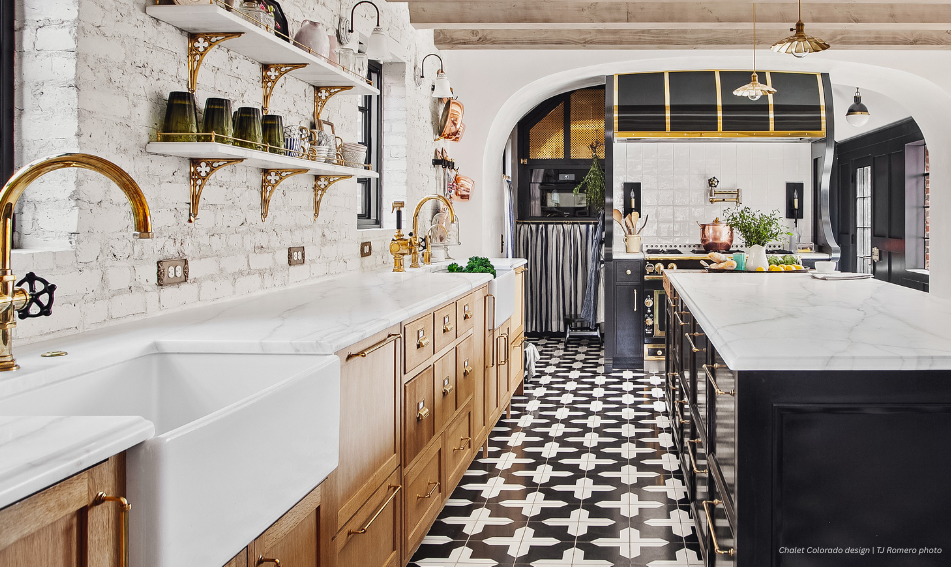
We all know the kitchen is the heart of the home and home is where the heart is. So, it stands to reason that the most focal point of the home is going to be someplace in the kitchen. We believe it is the range hood, and here’s why…
Most kitchens are full of horizontal lines:
- Counters
- Cabinets
- Islands
- Backsplashes
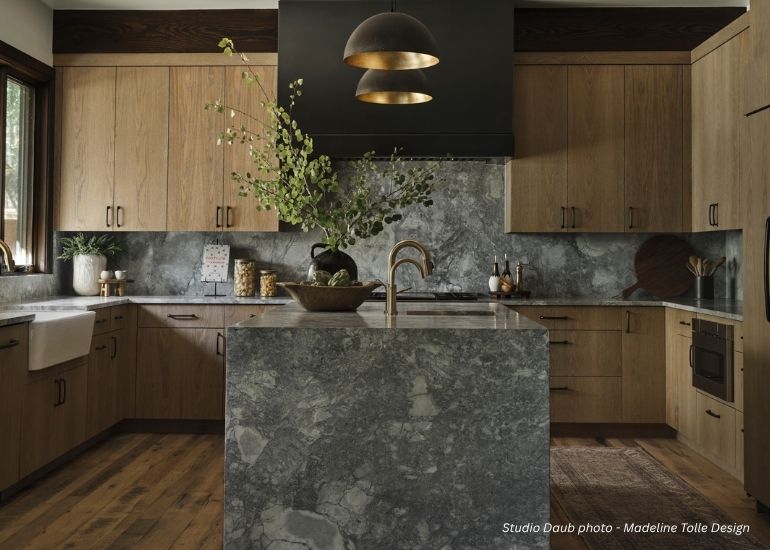
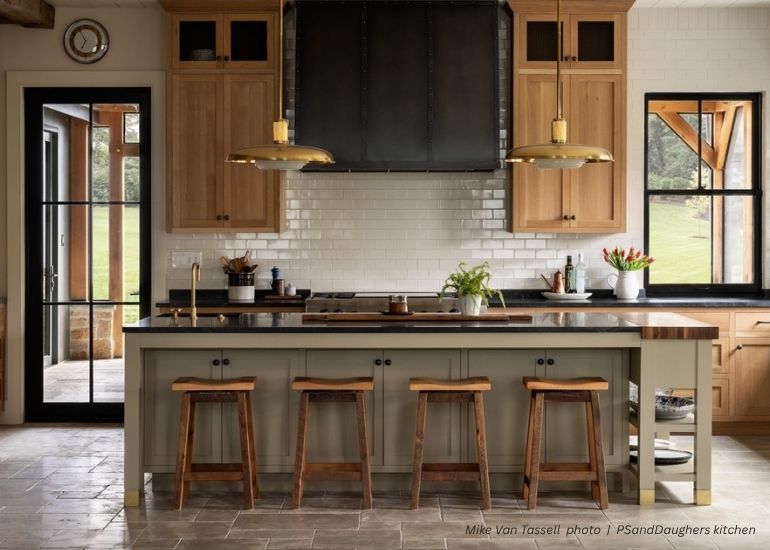
The range hood is often the main vertical element. Refridgerators blend in with the cabinets and are designed specifically to not draw attention. Light fixtures are also vertical, but they are thin and do not have the weight that a range hood does. That range hood can really anchor the space and define the design intention of the whole home.
Because it is able to define a space and style, it is worth the extra thought when choosing the right style for your home. Whether it is:
- Wrapped in metal
- Integrated into cabinetry
- Bold and sculptural
- Subtle and seamless
…it sets the tone. And if it is a simple, funtional piece of equipment, that will define your style and desgin intention as much as something that grabs attention.
Even when people don’t consciously notice it, they feel its impact. Good hood? Kitchen feels intentional. Hood that is placed too high? Feels like the short bangs we got when we were seven. No hood? Something feels like it is missing and we start checking our pockets for keys, wallet and glasses.
You get the point… a rangehood can make or break the best design intentions. This is not the place to skimp!
Do You Really Need To Have A Range Hood?
We are going to tell you “yes”, 100% with a gas cook top as it is built into the building code for your safety. But the reality is, its not required over induction cook tops or electric stoves because you are not creating any carbon monoxide that needs to be cleared from the air you breathe.
That said, if you cook at all ventilation isn’t a luxury, it is an increadibly helpful tool and appliance to have in your space.
A quality range hood protects:
- Your air
- Your finishes
- Your cabinets
- Your investment
- Your sanity
All that said, that is not why we would never have a kitchen without one! We would always recommend the range hood because of the beauty, design impact, interest and overall personal fulfillment when you sit down on a lazy Sunday morning with a cup of coffee, new cross word to work and gaze at a piece of art that you chose with love.
The Design Side: More Than Just a Fan Box
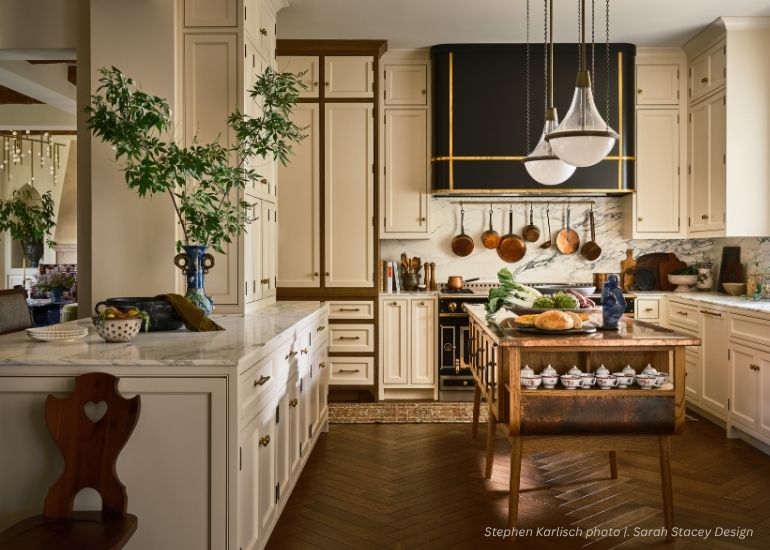
As you know by now, this is where we get excited. A range hood isn’t just equipment. It’s an opportunity.
An opportunity to:
- Add texture
- Introduce materials (like patina’d metal :))
- Create contrast
- Reinforce your style
- Make a statement (or quietly elevate)
Modern, rustic, traditional, transitional, maximalist, minimalist, we’ve seen hoods transform every style.
When done right, it becomes the architectural centerpiece of the kitchen. The balance that pulls it together… much like the eyebrows on our face.
Most people don’t think about eyebrows every day, but when they’re shaped just right, they frame the face beautifully. And when they’re missing… something feels off. You may not be able to explain it, but you can definitely feel it.
Range hoods work the same way! When they’re done well, they elevate the entire kitchen. When they’re missing, undersized, or forgotten? The space feels unfinished, unbalanced, and a little… naked.
Every kitchen deserves a hood that performs beautifully and looks incredible. Because when the eyebrows are right… everything else falls into place 😉